
Healthcare Innovation / Value Based Care
GUIDE Has Moved From Planning to Execution
As the CMS GUIDE Model enters its next phase, supporting dementia caregivers between clinical encounters is becoming an operational challenge, not simply a program requirement.
For the past several years, much of the conversation around the CMS GUIDE Model has focused on what it could change about dementia care. Now, for participating organizations, the conversation is becoming much more practical.
How do we actually make it work?
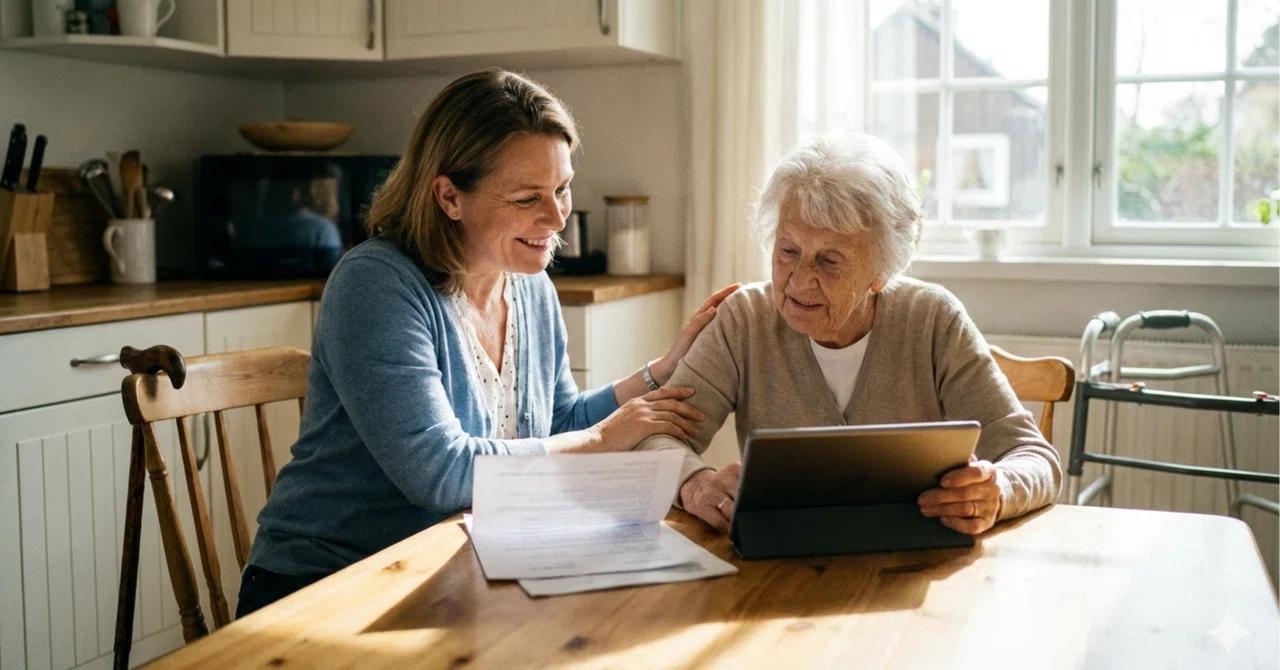
That question matters because GUIDE is built around a reality families living with dementia have understood for a long time: dementia care does not happen only in the doctor's office. Most of it happens at home, between appointments, when a caregiver is trying to manage a new behavior, coordinate medications, find a community resource, understand a change in condition, or simply figure out what to do next.
The GUIDE Model creates a structure intended to better support that reality. Participating organizations are responsible for delivering coordinated dementia care that includes care navigation, caregiver education and support, connections to community resources, 24/7 access to support, and respite services for eligible beneficiaries.
The model itself is no longer new. The operational challenge of delivering on its promise at scale is where things become particularly interesting.
July 1 Marked Another Important Transition
GUIDE began in July 2024, with established dementia care programs beginning service delivery at that time. New Program Track organizations spent the first year building their programs and began delivering services in July 2025. On July 1, 2026, Established Program Track participants entered their third performance year and New Program Track participants entered their second.
That date also brought an important expansion involving Residential Care Communities, or RCCs. Beginning July 1, GUIDE participants must have a CMS approved partnership arrangement with an RCC before providing GUIDE services to eligible patients who live there. CMS also introduced a distinct RCC tier for these patients.
These changes are another sign that GUIDE is moving deeper into implementation. The questions participating organizations face are increasingly less about understanding the model and more about building the infrastructure required to deliver it consistently.
The Hard Part Happens Between Appointments
A care plan can be developed during an appointment. The caregiver still has to live it at home.
Imagine a daughter caring for her mother with dementia. She leaves an appointment with instructions, resources, and a plan. Three days later, her mother begins refusing medication. A week later, she starts waking repeatedly during the night. Then the daughter notices that she is eating less, but she is not sure whether the change is significant enough to call the care team.
None of those moments necessarily happens when a clinician is present. Yet collectively, they are the reality of dementia care.
GUIDE recognizes this by placing meaningful emphasis on the caregiver. CMS requires participating organizations to offer caregiver skills training, information about dementia, support groups, and one on one support. The model also measures caregiver burden over time, making the caregiver experience part of how GUIDE performance is evaluated.
That represents an important shift. The caregiver is not simply accompanying the patient through the healthcare system. The caregiver is part of the care infrastructure.
Scaling That Support Is the Next Challenge
Supporting one caregiver well is one thing. Creating a consistent experience across hundreds or thousands of families is another.
Organizations participating in GUIDE need ways to keep caregivers connected and supported between appointments while making sure the information that matters can reach the appropriate care team. They need to identify when a caregiver's needs are changing, connect families with the right resources, and provide support without creating another disconnected workflow for already busy clinical teams.
That raises some very practical questions:
- How does a caregiver know where to turn when something changes at home?
- How can useful information from daily life make its way back to the care team?
- How do organizations deliver education when the caregiver actually needs it, rather than only during a scheduled encounter?
- How can care teams identify changing caregiver burden or emerging needs before they become a crisis?
These are not simply technology questions. They are care delivery questions. Technology becomes valuable when it helps make that care model easier to deliver.
Technology Should Connect the Spaces Between Care
At NeuralCare, we have been thinking deeply about this "between the visits" layer of dementia care.
Neural is being built around the caregiver experience, with the goal of giving caregivers a place to organize information, navigate day to day challenges, access guidance, and stay connected to the larger care journey.
For healthcare organizations, the opportunity is not to introduce technology simply because GUIDE is a new model. It is to use technology thoughtfully to extend the reach of the care team into the places where dementia care is actually happening.
A digital platform cannot replace a care navigator, clinician, social worker, or community partner, nor should it try. What it can potentially do is help connect those resources to the caregiver more consistently and make support easier to access when the caregiver actually needs it.
That distinction is important.
Caregiver Engagement Cannot Be an Afterthought
One of the risks with any new care model is focusing heavily on the requirements that are easiest to measure while underestimating the human experience underneath them.
GUIDE explicitly aims to reduce caregiver strain and improve quality of life for both people living with dementia and those caring for them. CMS also ties participant payments in part to performance measures that include caregiver burden.
That means caregiver engagement is not a nice addition to the model. It is central to what GUIDE is designed to accomplish.
The challenge is that caregivers are already overwhelmed. They do not need another complicated portal, another login they cannot remember, or another source of information they have to search through when they are exhausted.
The best caregiver infrastructure will likely be the infrastructure that asks less of them while helping them accomplish more. Support needs to be accessible, intuitive, relevant to what is happening now, and connected to the larger care experience.
The Next Phase of GUIDE Is About Infrastructure
GUIDE has created an important framework for delivering dementia care differently. Now participating organizations have to turn that framework into an experience that works for real families every day.
That requires more than meeting individual program requirements. It requires thinking about how care navigation, caregiver education, community resources, clinical teams, residential partners, and technology fit together as one care experience.
As GUIDE continues to mature, I believe one of the most important questions healthcare organizations should be asking is this: What infrastructure are we building to support the caregiver on the days when there is no appointment?
Because for families living with dementia, those are most of the days. And increasingly, supporting what happens during them is not separate from dementia care. It is dementia care.